Saturday, July 20, 2013

New home

Well, two new homes really.
1. The gorgeous apartment I moved into a month and a bit ago with Lindsay.  I pinch myself every time I sit on our porch and look out over flowering trees, palm trees, and the beautiful city I have been lucky to call home for the past two years.


2. Cambridge!  One more month until I leave Uganda, wow!

Sunday, April 14, 2013

Copenhagen

I took two short trips to Copenhagen - one in mid-January and another in late February - to work with UNICEF's supply division which happens to be headquartered there.  We are working with them on my project on Point-of-Care diagnostics, and our goal while I was there was to read all the proposals suppliers had submitted relating to the project (which cannot be taken off-site) to inform the procurement process and to help understand the new lab diagnostics that are going to be coming to market soon.  

                            
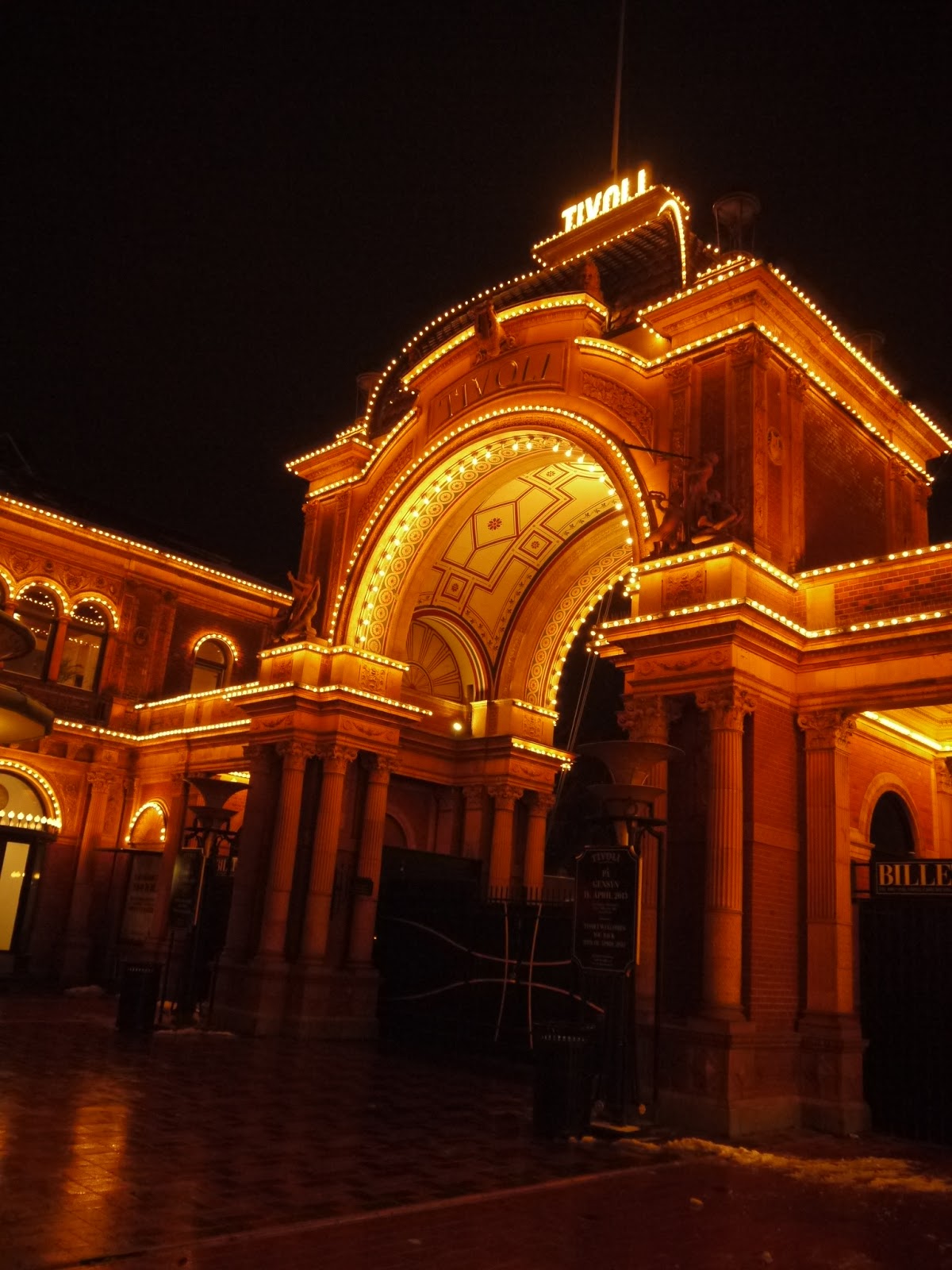
The trips were both very busy with work, but I loved at least being able to see the city - it is really spectacular.  January is definitely not the ideal time to visit - the sun came up around 9am and set around 3:30pm when I was there - so I am hoping I'll get another chance to return in more favorable conditions (and when things like Tivoli Gardens are actually open!).  Pictures from a beautiful nighttime walk (well, it's almost always nighttime in January in Copenhagen, so that's not very descriptive!) around the city... 


 On my last day, we took the train over to Mallmo, Sweden for a couple hours!

Queen Elizabeth National Park

For the second half of Easter weekend, we drove South from Kibale Forest to Queen Elizabeth National Park.  The park is famous for its lakes and for its game drives, but I hadn't anticipated how stunning the backdrop to all the wildlife would be -- the misty, snow-topped Rwenzori mountain range (the highest mountain range in Africa) is right next to the park.
It may take some squinting to spot the lions in this photo, but you can see the beauty of their environment.

On our ride out to the game drive just after dawn, we passed this bushbuck and tree full of birds:

We had rented out a nifty safari van for the day

A Uganda Kob - the national mammal of Uganda (I didn't know countries had national mammals...)

On our way out of the park, we were feeling a bit sad that we hadn't seen many elephants, and then we saw a family of about 20 of them crossing the road in front of our car!


Then, from our hotel pool, we could see a couple elephants off in the distance and a gorgeous view out over the park.
With Amaan, Noorin, and Lindsay
After dusk
 We went swimming in the rain!

It is always fun to be reminded of what a spectacularly beautiful country I live in and to see new parts of it.  I have now been to five of the country's ten national parks, and I'm hoping to make it to at least a couple more in the next few months.

Tracking Chimpanzees in Western Uganda

Over the long Easter weekend, I went to Western Uganda with a few friends.  We spent the first couple days in Kibale Forest National Park, the park with the highest concentration of primates in East Africa.  The park has around 1500 chimps, of which there are 3 groups of about 100 chimps each that are habituated to humans.  We got to spend a whole day following around chimps in one of the families - it was amazing watching a little chimp drama unfold over the course of the day.  We hiked for over an hour to find the chimps in the forest, and as we got to them, one of the female chimps was screaming in a very alarming way.  Our guide told us the female was screaming because she was in her fertile period (oestrus) and was being harassed by some of the male chimps.  She came about 4 feet away from us because she knew that if she was near humans, the other chimps wouldn't bother her.
We followed the chimps around as they ate, mated (female chimps during their fertile period will mate with up to 10 males per day!), climbed in the trees, and rested.

We followed this guy around for about 45 minutes - it was pretty wild just being able to watch him as he went about his day.  Chimpanzees in the wild are afraid of humans, but the Uganda Wildlife Authority habituates groups of them over time to become used to humans so researchers can study them and bring tourists to see them.  Tourism is a major source of revenue for the communities around the forest, which helps the conservation effort as these communities are less likely to then harm the forest.

The forest was beautiful on its own as well - I have never seen more butterflies or such an incredible variety of butterflies.  The birds were also spectacular.


Saturday, March 23, 2013

Lalibela

A few weeks ago, I found myself with a free weekend in Ethiopia in between Friday and Monday meetings with the Ministry of Health there.  I had been hearing about the rock-hewn churches of Lalibela basically since I moved to Uganda, and I heard you could get to them from Addis Ababa for just $100, so I planned a quick Saturday morning to Sunday morning trip...alone.  While the thought of even eating a meal alone used to scare me, after almost a year of traveling constantly and often without company, the prospect of a whole trip by myself now seems like no big deal at all.
Lalibela is a town in the almost Arizona-esque mountains of Northern Ethiopia that is a center of religious pilgrimage in the Ethiopian Orthodox Church. The 12 churches were constructed in the 1100s as a sort of "Jerusalem" for the Ethiopian church.  They are all monolithic (formed of a single block of stone) or semi-monolithic and are carved directly into the mountains.  It is awe-inspiring imagining their construction hundreds of years ago.


One of the hardest parts of being in Lalibela was the feeling of being surrounded by some of the deepest poverty I have ever witnessed.  I had never seen a goiter before being in Lalibela, and I also don't think I have ever seen so many people who just simply looked hungry.  My guide told me that in their region of Ethiopia, they are only able to grow enough food to sustain themselves four months of the year, and the rest of the year they rely on food aid.  It was jarring to be in a place with such incredible natural beauty and such an amazing historical treasure that was so deeply, clearly poor.


One of the strangest things about visiting historical sites in Africa is the haphazard way precious things are often displayed and the attempts local organizations make to please UNESCO.  While the exteriors of the churches in Lalibela were spectacular, the interiors were full of ratty cloth, unframed paintings from 500 years ago, and creepy fluorescent lighting.  These are probably the nicest interior shots I saw while there.  My guide is in the second photo - he became a guide after the communist government was overthrown and he lost the political position he had gained as a member of the party.  I think he is still slightly bitter 20 years later.


Overall, it was a pretty spectacular way to spend 24 hours and just over $100.  The most amazing (and most characteristic of the monolithic style) church, the Church of St. George, is pictured below from 3 angles.


Bonus photo: this is a restaurant I went to that is owned by a slightly loony Scottish woman.  It really has one of the most incredible settings I have ever seen for a restaurant and certainly one of the strangest designs.  While I was sitting there, a group of 3 medical students from Columbia who were interning in Addis for a month invited me to join them for dinner, so I had a break from my Kindle.


Friday, December 7, 2012

20 Ugandans, 21 including you

At the conference I was at in Cape Town, I was chatting with the lab coordinator from one of the USAID implementing partners I have worked with a bunch this past year.  I said "there are so many people from Uganda at this conference" and he responded "yes, so far I have counted 20 Ugandans, now 21 including you."  It made me smile in a moment when I was feeling homesick for my "real" home.  8 days until Christmas trip!

I had to head to the embassy in Kampala recently to get a second set of extra pages added to my passport after trips (since August) to Kenya (2x), Ethiopia (2x), Mozambique (2x), South Africa (2x), Swaziland, Tanzania, Rwanda and Zimbabwe.  Reading that list makes me feel tired, but the travel itself was actually generally great and pretty energizing.  Coping methods for excessive travel: 1) write in beautiful journal given to me as going-away present by my Credit Suisse co-workers during airplane take-off and landing when I'm not allowed to read my Kindle or work on my laptop 2) carry Kindle everywhere, download New Yorker Kindle edition every Monday and lots of good books 3) take advantage of quality time with friends when I get it 4) meditate! I started meditating and try to do it 5 times a week - so far so good.  5) practice gratitude for this wealth of experiences and the opportunity to do work I care deeply about.

A very few photos from various adventures (there would be more except that I stupidly took my blackberry on a 3.5 hour hike with my friend Leah in a banana farm/forest by Lake Kivu in Rwanda during which we got caught in three torrential downpours... attempts at recovery of said device and photos contained within are ongoing):

From a trip to a teeny island in the middle of the Nile with my roommates Lorne and Lindsay (below) and a couple friends
 Nile
 In Beira, Mozambique (where I hung out with Abel)
Crazy urban decay in Beira - it's a fascinating post-colonial town with wide avenues, beautiful beaches, and tons of once gorgeous buildings.  I'm told it has experienced a bit of revival of late with Chinese investment in the port for exporting goods mined inland.
 Soccer game in Beira
The pretty marvelous coffee shop that opened down the street from my house in Kampala.  The manager there once described it as me and my roommates' "home" which I'm just going to take as a good thing
A bit worse for the wear after the infamous hike in Rwanda (Leah's camera).  Leah is working for an organization called the One Acre Fund that provides fertilizer and training to farmers on a loan plan - if you have read Poor Economics, you will know why I think it's a super cool organization
Re-uniting with Global Health Corps friends Morris, Emma, Ashley and Leah in Kigali, Rwanda

 With dear Abel.  Before I left Beira, he asked me about 6 times for a copy of this photo.

Habituation

I've been in Cape Town for a week and a half now, and I've already started to take some things for granted (cheese! grapes! shrimp! craft beer! have all been reduced from 2 exclamation point items to 1 exclamation point items), but it's still too beautiful to fully take for granted.  It has been described as "the least African city in Africa" and in my limited experience, that is definitely accurate.
I've been at the first annual summit of the African Society for Laboratory Medicine which has been really fascinating because it brought together a lot of the people I've been working with in Uganda, Ethiopia, and Mozambique over the past year and allowed me to learn a lot more about labs than the beginnings I've gotten from learning on the job.  I'm generally anti-conference -- I think they can be a major waste of time and take people away from real work -- but I've had more productive meetings this week than I would have in a typical month, so that's been great.  We were at the conference center from 8am to 9pm most days this week, but I also got to see penguins AND a Lady Gaga concert in the past week, so I am feeling pretty lucky and grateful to be here both for work and for fun reasons.
More photos - and hopefully will take more this weekend before I head to Zambia on Sunday.
With my manager and the scientist on my team before the Lady Gaga concert - we have all looked better...
 Great hike overlooking the city
 Beach on the peninsula